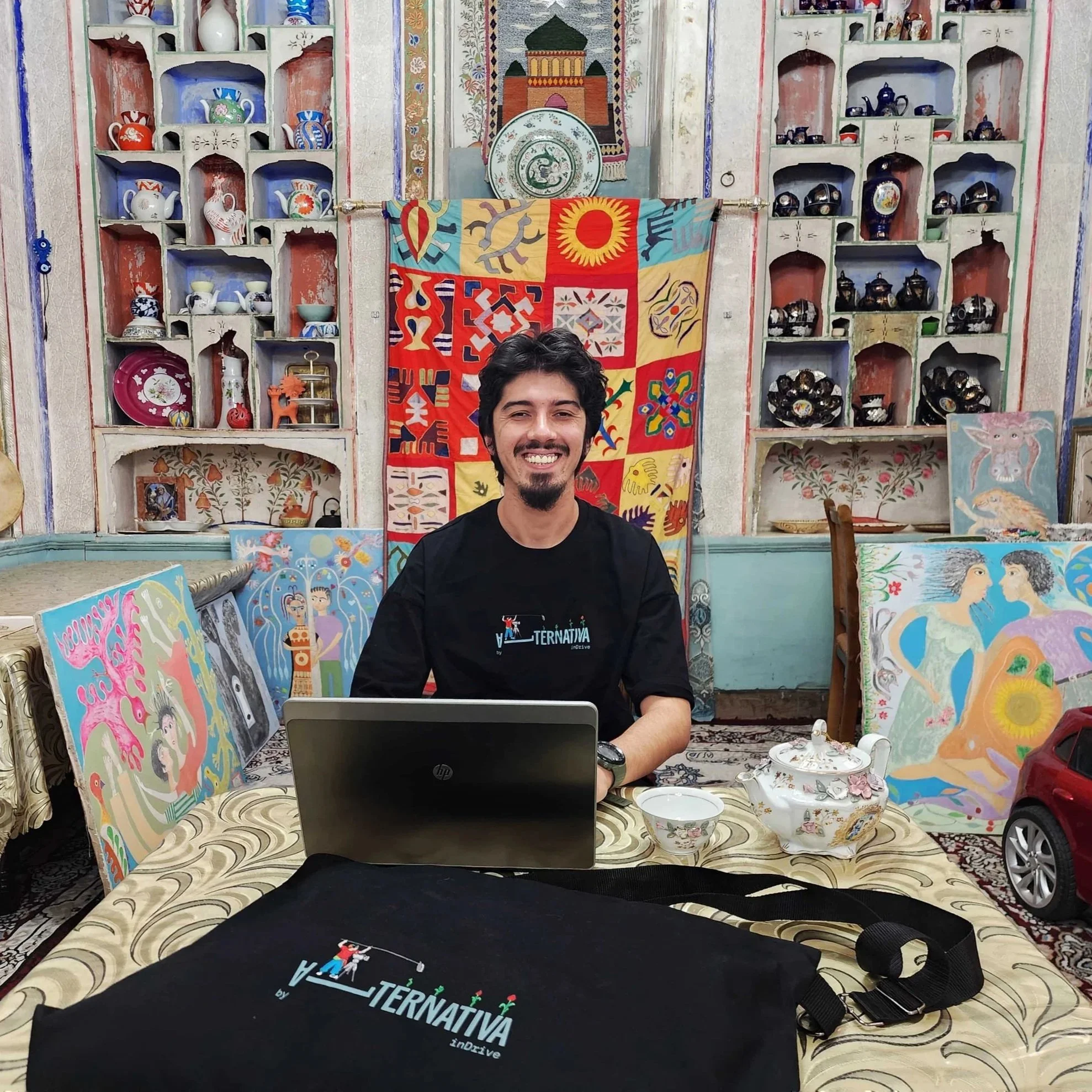
What You Almost Saw:
A Conversation with Behzod Boltaev
Written by Guzal Koshbahteeva𓇢𓆸
I find it very intriguing how everything we look at seems to require a frame, whether we are conscious of it or not. Even this preface has to be presented through a particular angle, which in turn might keep a reader engaged and searching for the set answers or questions.
While composing this paragraph, I was reminded of a comment by Abbas Kiarostami, a filmmaker who also worked with photography. He collected photographs of trees and displayed his work. His exhibition was well received. Later, he expressed surprise at the response, saying that people at the gallery were interested in seeing the photographs, and yet just outside stood real trees, in their ordinary context, unnoticed. People came to see replicas of nature, framed and exhibited in a room.
Strange, is it not?
We rarely look until something has been framed for us. The frame pauses, suggesting that there might be something to notice. Furthermore, more often than not, we come to things that are already chosen for us. Though museums, screens, windows, and even language.
Some might argue this is the artist’s role: to offer a vision, to guide perception. And that is true. But even then, artists select what to exhibit.
At the same time, the frame performs another function. Perhaps, more subtly, it establishes a stage for a dialogue to begin. A frame is a frame; it is as simple as that, but it creates that space in between that allows discoveries to happen.
In this spirit, I welcome you to read the following interview with Behzod Boltaev without the burden of a predetermined angle. This way, you can attend to what resonates, and just as carefully, to what does not.
𓂃𓈒
Guzal: Many people in Uzbekistan have seen your work. What do people most often misunderstand about your photographs?
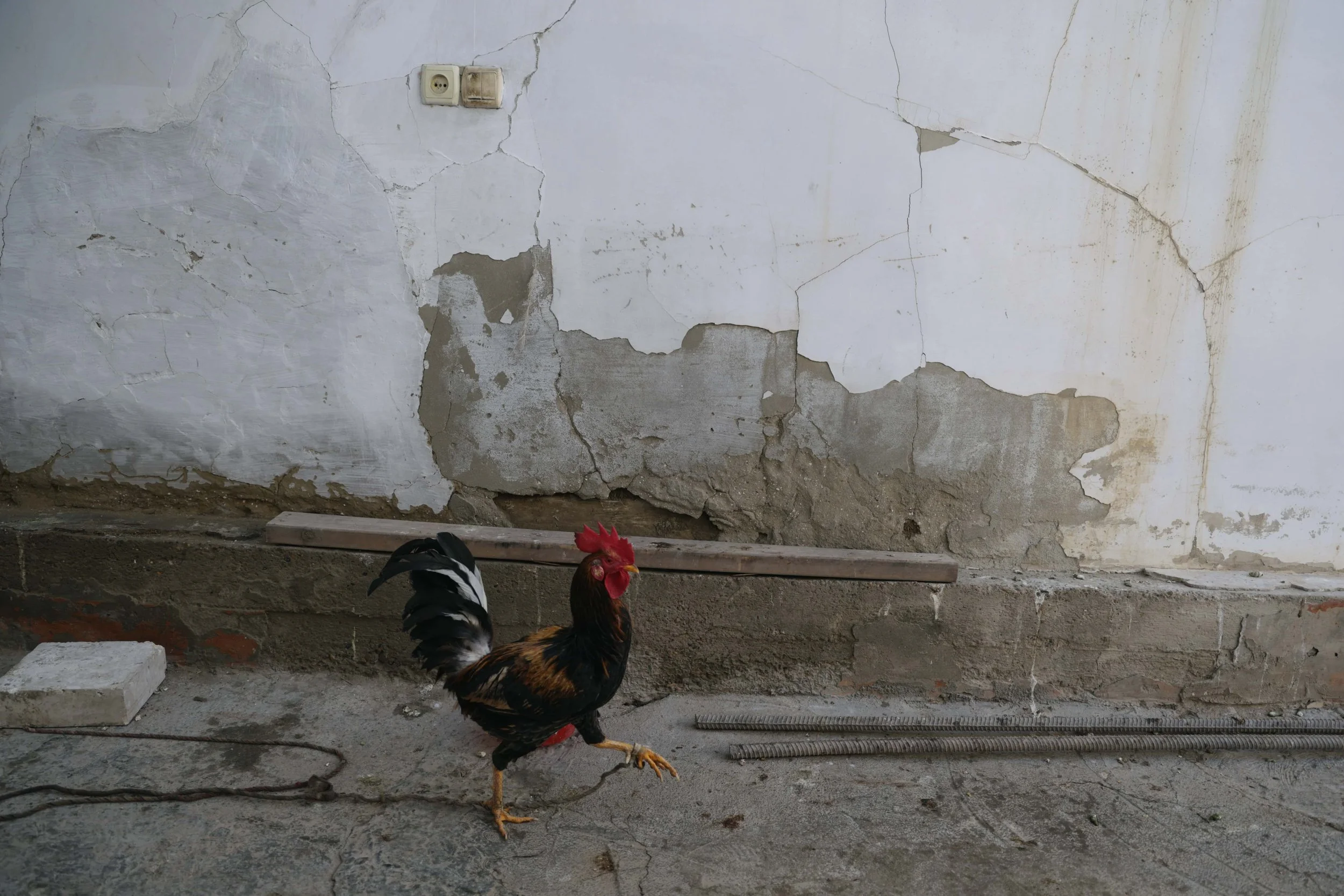
Behzod: First and foremost, I’m a documentarian. I photograph what I see. Staged photography isn’t for me.
Sometimes people criticize me for showing “the dirt” or for choosing the “wrong” angles, but I capture things as they are.
I used to argue on social media, but I’ve stopped trying to prove anything.
Guzal: What do you think about editing? like retouching a photograph using Photoshop?
Behzod: It is not for me. The photographs should reflect the exact reality after years of looking natural. Many young photographers, whether on Instagram or anywhere else, use editing. It destroys the image's natural quality. And my father used to tell me that a photograph should reflect reality exactly, so that people can relate to it.
Guzal: How important is ambiguity in your photography? Or do you strive for clarity?
Behzod: I value clarity. A photograph should clearly and directly show what there is or at least make the author’s intention immediately understood, even to someone far removed from art. My father used to say that I should photograph in a way that, hundreds of years from now, people could have a clear sense of how life looked today.
Guzal: In my previous essay, I described your approach as “misunderstanding as method.” How close does that feel to your own view, or does it sound like an over-interpretation?
Behzod: No, I wouldn’t say it’s too much. Actually, there’s a lot of truth in it.
Guzal: When you photograph, how important is it for you that your audience understands your work?
Behzod: I don’t think about an audience when I photograph. My attention is always on the moment itself. There are times when I feel an urgent need to take a picture, but I don’t have my camera with me, or its battery has run out. In those moments, I ask strangers if I can borrow their phones. Later, they sent me the images by email.
What matters to me is not the reaction the photograph might receive, but the act of capturing what is happening in front of me. I don’t begin by thinking about interpretation. I begin by paying attention. First, I take the photograph. Only afterward does anything else follow.

Photographs by Behzod Boltaev. © 2025Guzal: Your father, Shavkat Boltaev, worked with many of the same subjects as you. Do you feel you’re continuing his work, or are you searching for your own path?
Behzod: I believe continuing my father’s work is my responsibility. He spent half his life working on a long-term project about minority communities, specifically, Bukhara’s Jewish population and Central Asian Roma. I’m continuing to photograph those same subjects. But I also have other projects of my own, like People of Bukhara, and so on.
Guzal: When you think back, what’s your earliest memory tied to photography? Was it always something you felt belonged to your family?
Behzod: My earliest memory isn’t about photography itself, but about photo equipment. My father had all kinds of photo and video gear. I was four years old and wanted to hold it, press the buttons. He didn’t always let me. But one day, he gave me a little Sony point-and-shoot camera. Later, I realized it was a family thing. My love for photography definitely came from my father, and I’m very grateful for that. We used to make videos and children’s films together. My younger brother, Hofiz, would join us too. It was a really special time.
Guzal: I see your point. Are there many photographers in Bukhara near you?
Behzod: Yes, there are. I have students of my father. who taught me skills. It is strange when I think about it, we are five family members at home, and I am the last one. All of them chose different career paths, and only I chose to become a photographer. You would instantly think it means my father was close to me, but it is the exact opposite. We were… hm… not able to easily communicate with each other. Perhaps our characters were opposites.
Guzal: Maybe he felt your sensitive nature and understood early on that you have it in you.
Behzod: True. When I was taking photos as a child, the only thought that mattered was that I would take a type of photo my father would approve of. I meant artistically. I would come and say, "Dad, look at the photos I took today," and he would reply, "Junk, junk." (Laughing) Yes, it really was like that.
Later in my life, my mother told me—this was when I was very young, around eight years old. I remember we went to Samarkand. My father had to work and shoot a madrasa. He took me. It was somewhere in a very rural area, and I played with street boys, but very soon I could not cope with my boredom, and I went to ask him:
“Dad?! What are you trying to shoot here?” To which he replied:
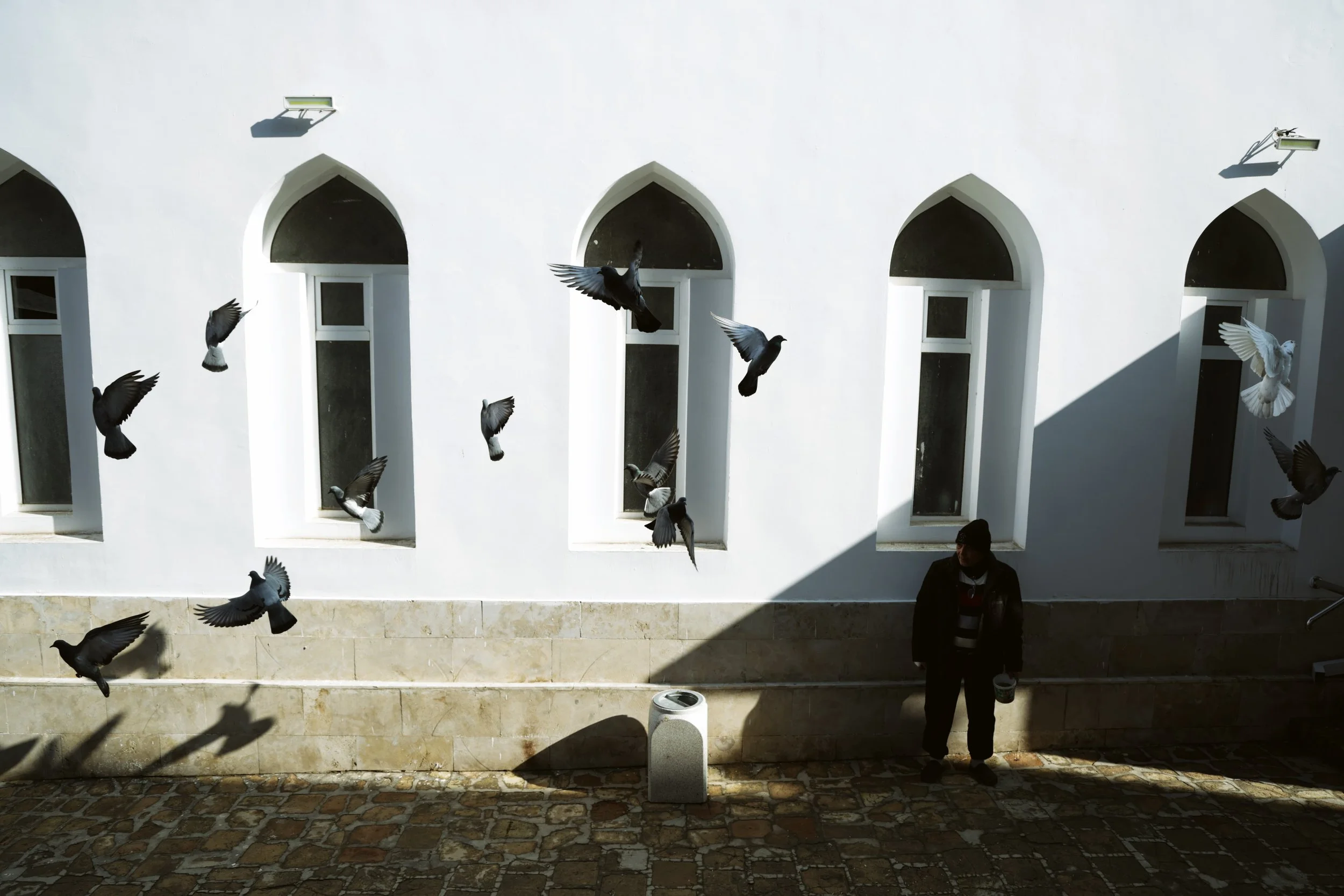
“I will not go back home until I catch birds flying over this building.”
I told him, “Do you need a bird? Give me a camera.”
I climbed the building; luckily, there were two birds. Can you believe? I don't remember everything, but only some moments—like these birds… Then I showed it to him. He said, “Great,” and we left. Then he… what… he bought me a dinner, all the delicious cuisine we have here. My memory is not clear, but my mother tells me this story. His friends often tell me about how he felt. But when he was around, we did not communicate as much.
Guzal: Behzod, what is a good photograph for you?
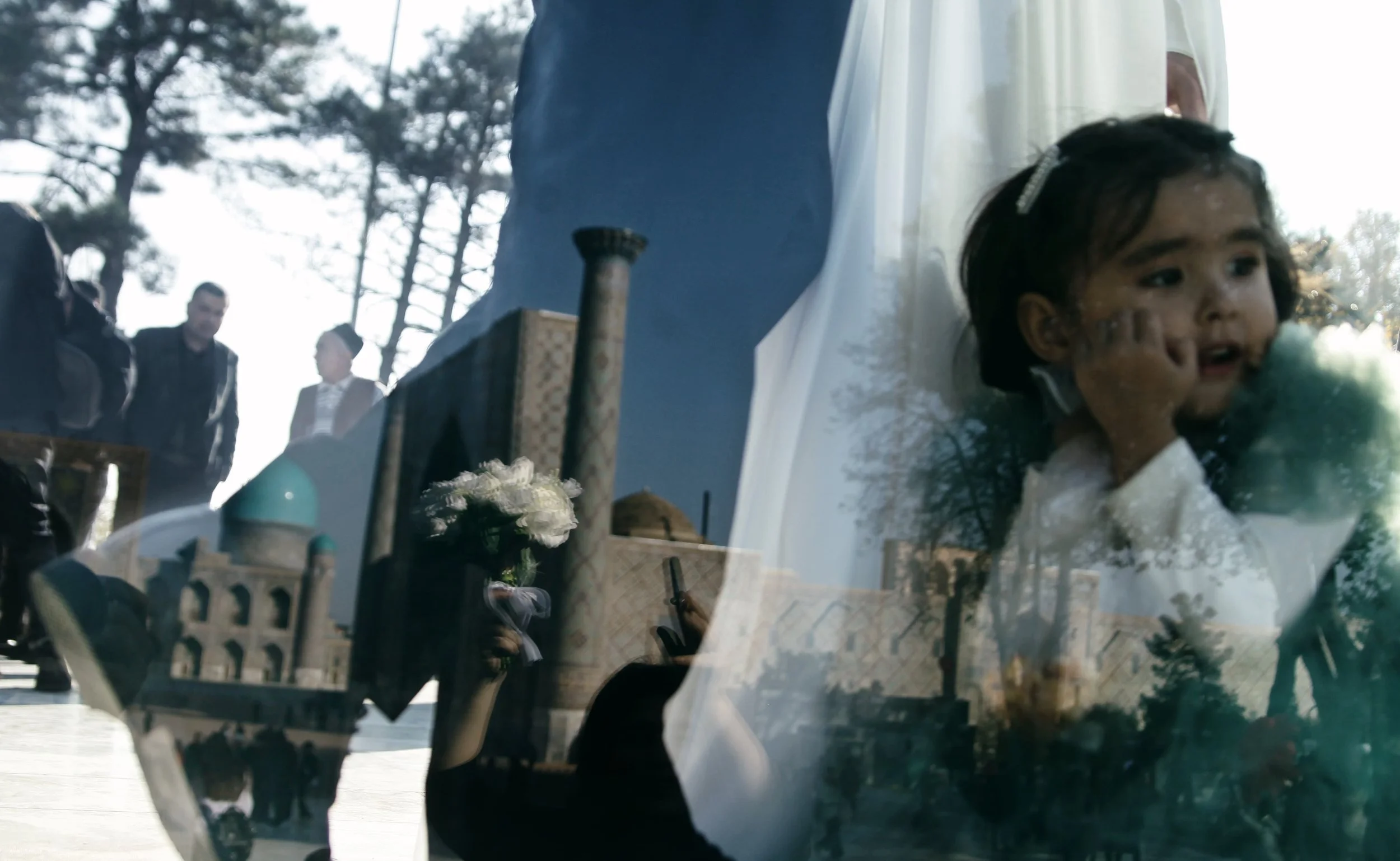
Behzod: I don’t have a preset notion of what a good photograph is. I took photographs of conflicts, and at such moments, your style doesn't matter; you have to try to tell the story to people. First and foremost, you are obliged to show, and second, you have to make an attempt so that this photograph gets inside people. So, when they look at it, they would sigh. For me, this is reportage photography; it is a beautiful genre. When it comes down to street photography, I think… You see, I try to perceive it as an artist. There was a painter named Kamāl ud-Dīn Behzād, and I was actually named after him. And I can’t draw, ….and I gave myself a word that I would take a photograph in a way that shall never enter a painter’s mind. In street photography, you can explore these artistic dimensions, and I believe you have to learn to look at streets with this painter’s vision, poetic if you want.
Photograph by Behzod Boltaev. © 2025Guzal: My next question would be: When you take photographs, do you feel there are different kinds of encounters? That sometimes you’re simply passing by and capturing what you see, but other times, it feels as if the image finds you, even takes hold of you? And then there are moments when the photograph clearly reflects you; your hand, your style, your way of seeing. Do you recognize those different levels in your work?
Behzod: I can’t name an exact photo or moment, but I try to capture the essence of a subject. In our society, there is this notion of pleasing others; in my opinion, I have to fill pieces inside of me first. I find that the art is to first fill the lacking elements within yourself, and perhaps then this spiritual depth or your fulfillment can ripple onto others. This also means I do not have to be liked by everyone. In this way, we are like doctors; dentists are not liked by people, but they heal what bothers a patient.
Guzal: That’s an interesting metaphor you just drew. I’d like to ask you whether there are parts of your practice that you find difficult or even frustrating. For example, the need to constantly be outside photographing, or moments when your own mood or state of mind doesn’t allow you to shoot?
Behzod: I cannot say that I dislike something in my work process… but for me… hm… the people I take photographs of, the contact, I wonder how they perceive me. The connection between the person and me is important and interesting. I cannot just come and start photographing a person who is distressed or feeling down. But then it is an experience for me and a challenge to battle my fear, whether I shall take or not. There is also an inner dialogue between me and the subject I photograph. Sometimes I could sense that this person would be frustrated or dislike me.
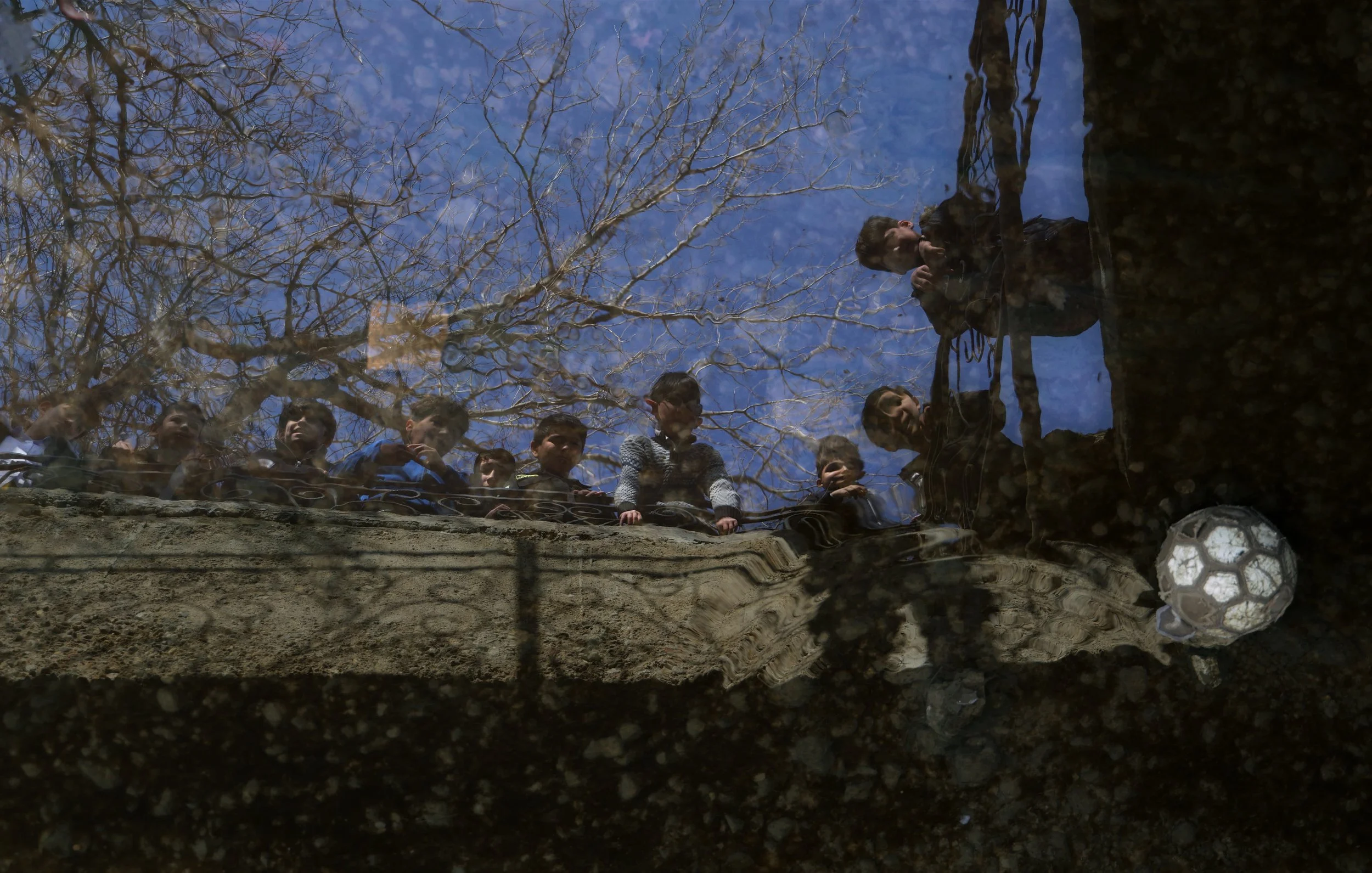
Photographs by Behzod Boltaev. © 2025Behzod: One part of my work is communication with people. Recently, I saw a bus driver. You know, I randomly choose a form of transportation and go exploring for my photographic practices.
I saw a bus coming my way, and in front of the glass were many flags from many countries. I went up and asked whether he knew every flag, kind of testing him. He knew them all. You must be interested in why I am telling you this story. You see, he is an artistic person in my eyes. He is a driver, but his true calling is something else. I am very much interested in such people, and there are many of them in our society. A person may be a bicycle fixer, but in his heart, a painter.
Guzal: It makes me wonder: do you feel that same pull toward other forms of art? Are you at all interested in cinema?
Behzod: I used to make short films before. Moreover, I was an active participant in various film festivals. About ten years ago, I got into trouble. I haven't been shooting since, but I plan to get back into it soon.
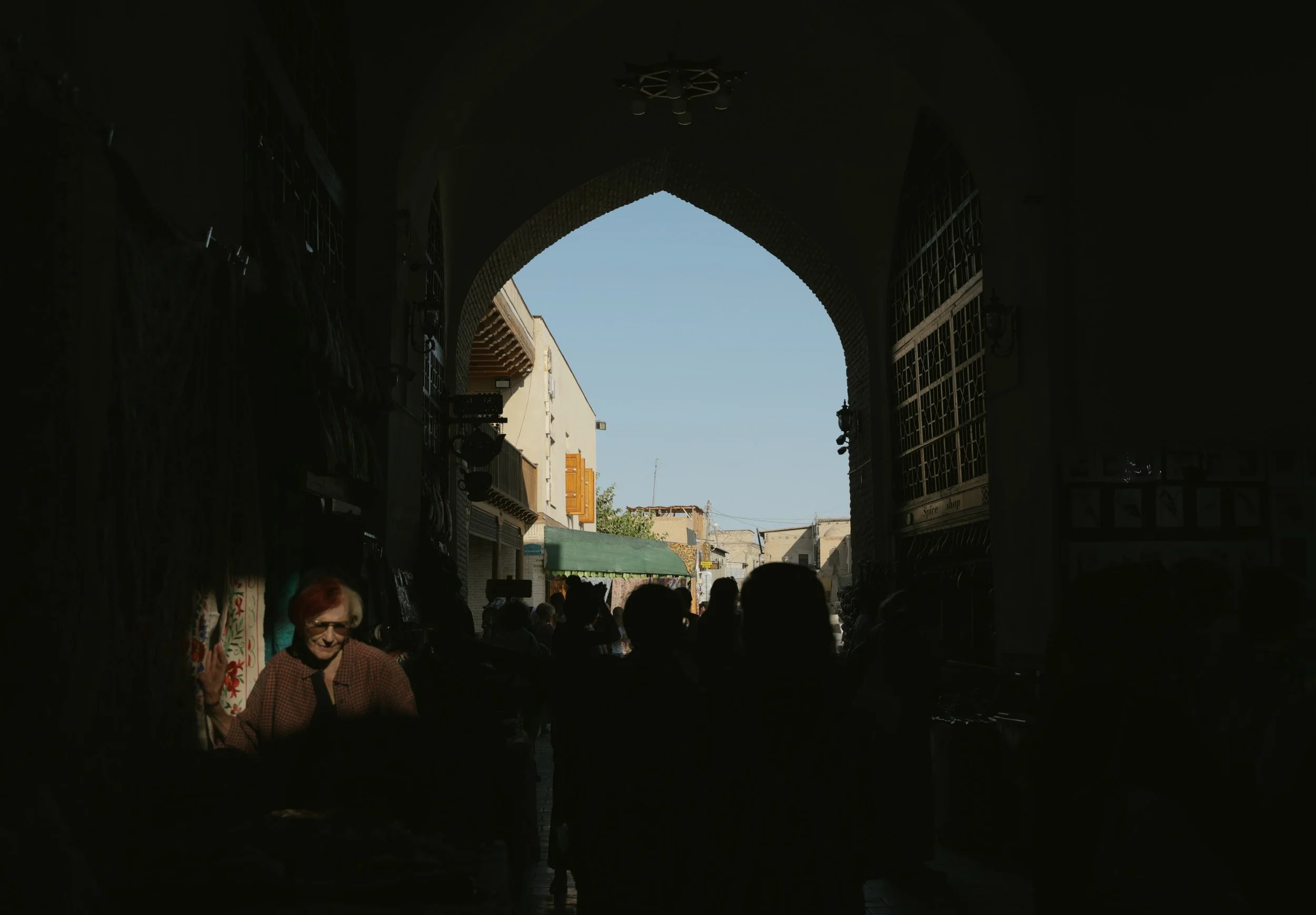
Photograph by Behzod Boltaev. © 2025Guzal: And with photography, have you ever thought about publishing your own photography book?
Behzod: There was this publishing journal, Docu Magazine, that texted me and offered to publish a photography collection of about twenty images. I got interested and sent my work to them. Aside from that, I’ve been experimenting on my own. I collected about fifty of my older photos, printed them myself at home, and put them up in a small gallery here, just to see if people would be interested. And they were. The quality wasn’t great since it was just a home printer, but people liked it anyway.
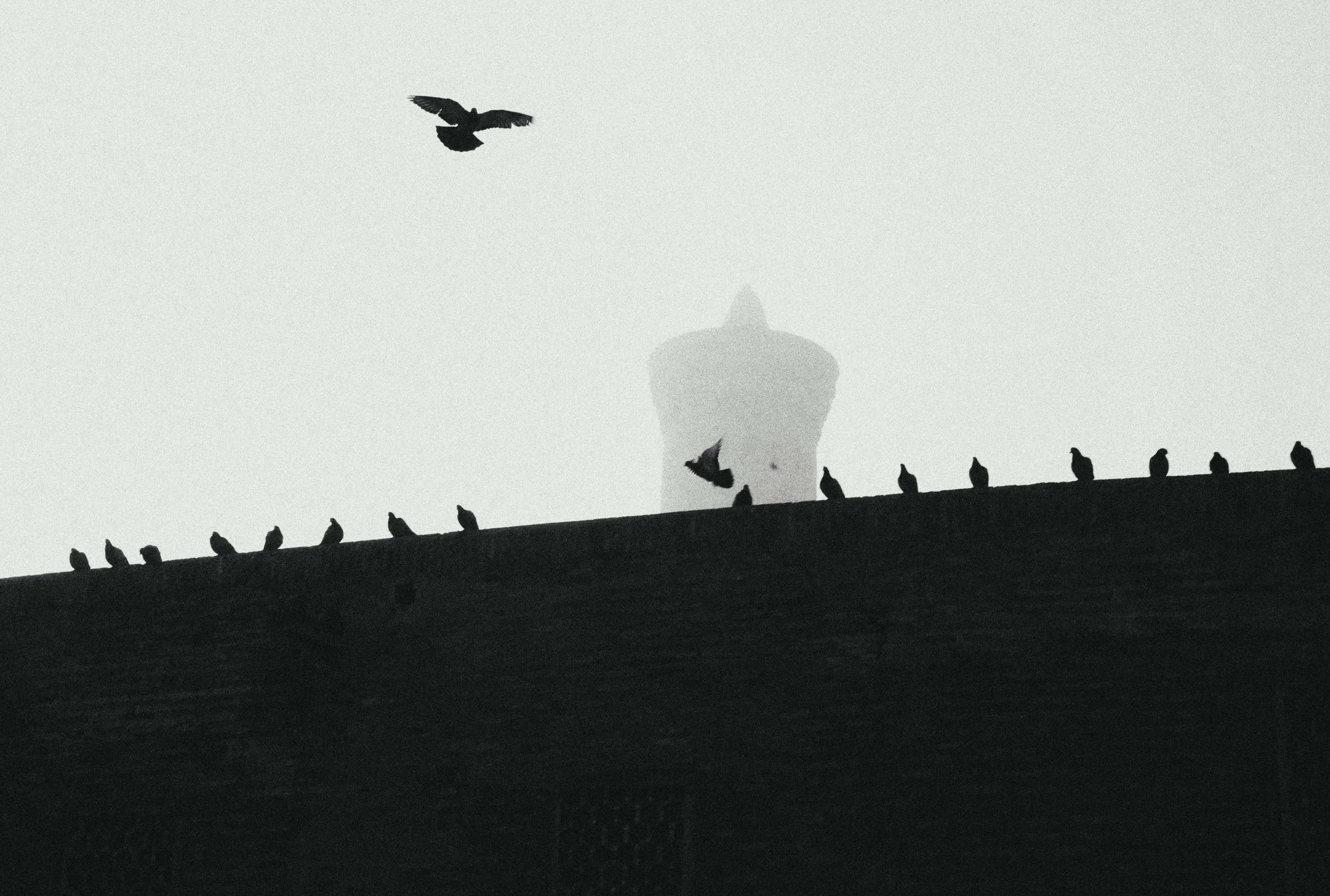
Photograph by Behzod Boltaev. © 2025I know you also recently took part in the Bukhara Biennale. What was that experience like for you, and is there something you'd want to show differently next time?
Behzod: My impressions of the Bukhara Biennale are really wonderful. It was a truly large-scale celebration of art, bringing together prominent cultural figures, outstanding artists, and art historians. The Biennale gave a strong push to the development of contemporary art in the region.
I have many ideas. And if I receive an invitation, I’d be happy to take part again.
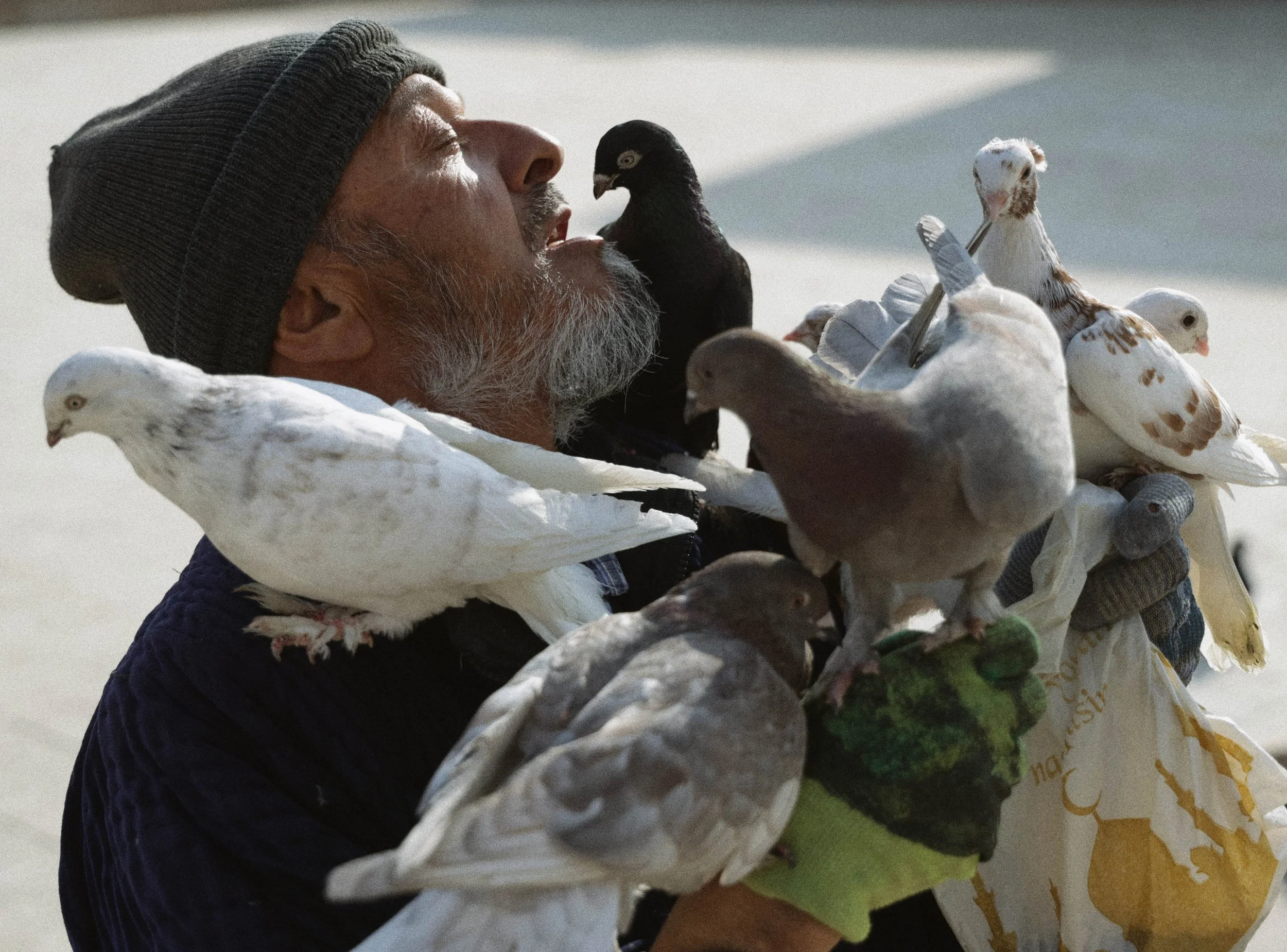
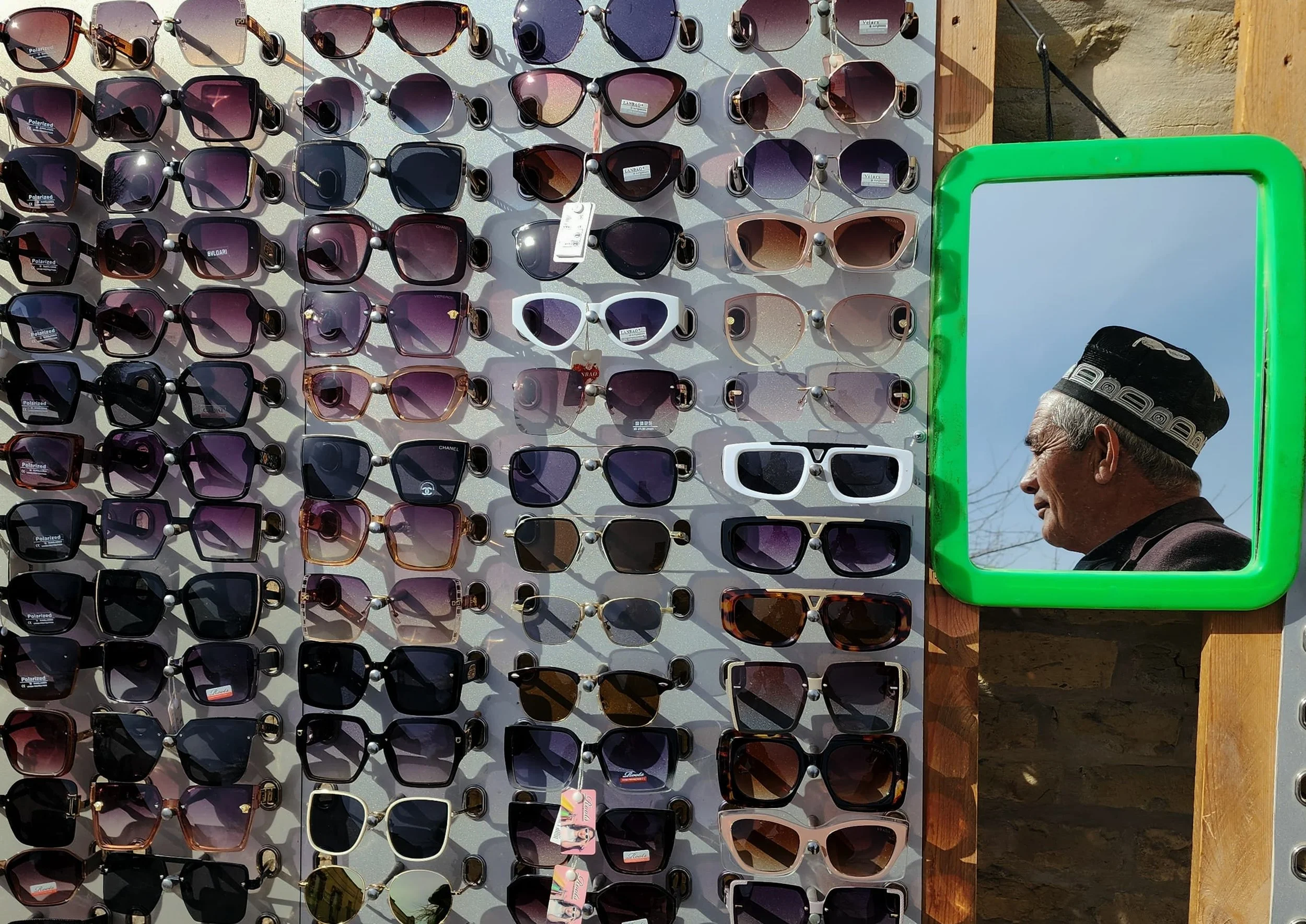
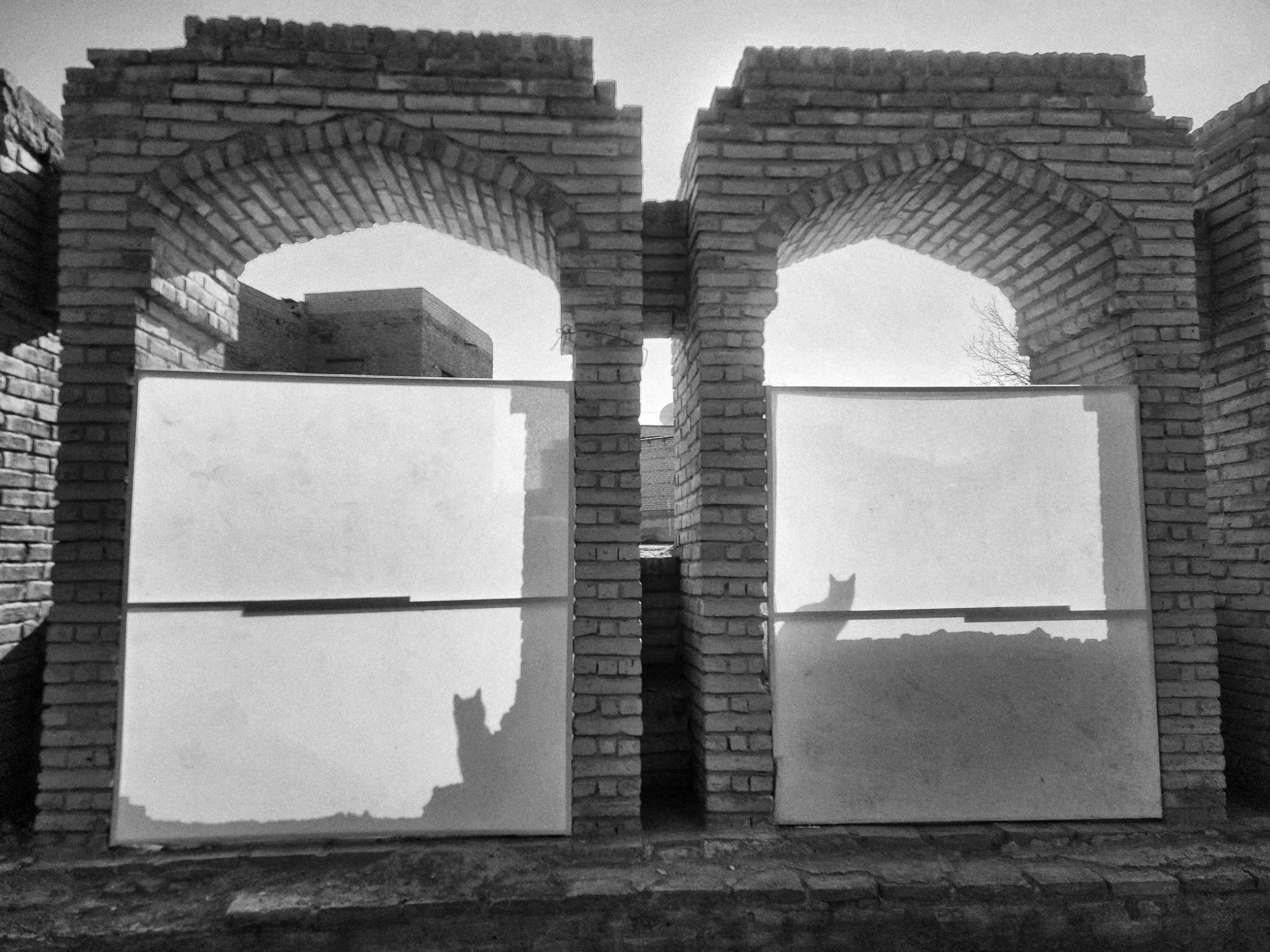
Photographs by Behzod Boltaev. © 2025𓂃𓈒
Ayneh extends its sincere thanks to Behzod Boltaev for generously sharing his time, reflections, and work. We hope this piece resonates with readers and helps bring wider attention to his ongoing practice.